











HUD outlines 7 steps to update manufactured housing code
The 7-step plan follows July’s ROAD to Housing Act change, rulemaking and HUD code updates could take 1-plus years

The 7-step plan follows July’s ROAD to Housing Act change, rulemaking and HUD code updates could take 1-plus years

For business owners planning their own succession, overlap of institutional knowledge is invaluable
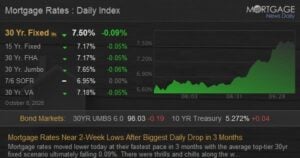
Mortgage rates moved lower today at their fastest pace in 3 months with the average top-tier 30yr fixed scenario ultimately falling 0.09%. There were thrills and chills along the way as well. The day actually began with a 0.01% INCREASE versus yesterday’s latest levels. This highlights a unique aspect of our rate index which has the ability to change more than once per day in response to mortgage lenders making intraday updates to their rate offerings. In other words, almost every lender lowered their rates today–many of them more than once. As has often been the case lately, the market movement can’t be traced to one standout event. There was certainly some benefit from mid-day headlines regarding the Iran war, but that alone was scarcely sufficient to be labeled as the x factor. A forensic review of the underlying market suggests a meaningful amount of support came from investors “deciding” that bond yields were high enough to be worth some more asset allocation. In other words, investors are less interested in adding bonds to their portfolio if yields are climbing and at risk of climbing more. But at a certain point, yields are high enough to serve as a good entry point for investors to jump back into bond ownership. This phenomenon doesn’t necessarily hearken additional downward momentum, but some would say it makes a case that recent ceilings should continue to be supportive unless new data comes to light that is unfavorable for bonds. In the current case, the nearest data with that kind of power would probably be next week’s inflation reports on Wed/Thu. [thirtyyearmortgagerates]

The deal could lift Century from 200 to 300 closings to 800, with a path toward 1,000 in DFW

Mutual of Omaha wholesale leaders explained how SecureEquity is helping senior homeowners with obstacles to HECM qualification

AGNT CEO said existing home sales could dip below 4 million in 2027 if mortgage rates top 8%

After 17 years of building the business, Sanford said AGNT can now run without his direct involvement

Lenders reduced offerings that allow for cash-out refinances and investor home purchases

Plan comes as lender ramps up cost-cutting efforts and pursues a sale of its U.K. bank subsidiary