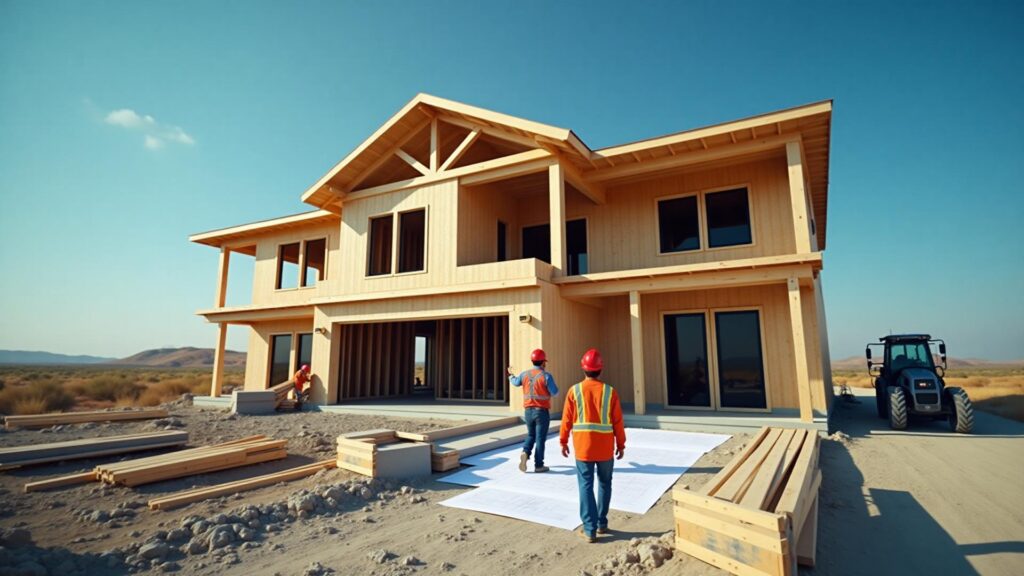
bg asset 1

Construction Loans: Finance Land, Building and Permanent Mortgage Options

A construction loan may finance an eligible lot, custom-home construction and permanent mortgage through one transaction or separate construction and permanent closings.

Possible financing structures include:

  • Construction-only loan
  • One-time-close construction-to-permanent mortgage
  • Two-close construction-to-permanent financing
  • Conventional construction loan
  • FHA construction-to-permanent option
  • VA-backed construction financing
  • USDA single-close construction loan
  • Jumbo or private construction loan
  • Modular or manufactured-home construction financing
  • Business-purpose spec-home financing
Buy Land and Build
Build on Land You Own
One-Time Close
Two-Close Financing
Custom Home
Eligible Modular or Manufactured Home

Construction loans are subject to borrower, lot, builder, budget, plans, appraisal, title, insurance, permits, project and underwriting approval. One closing, rate-lock terms, interest-only payments and permanent conversion are not guaranteed for every transaction.

Construction Loan Qualification Snapshot

Financing Structure

The lender determines whether the transaction uses:

  • Construction-only
  • One-time-close construction-to-permanent
  • Two-close financing
  • Builder financing with permanent takeout
  • Private or business-purpose construction financing

Lot

The borrower may:

  • Purchase the lot through the transaction
  • Own the lot free and clear
  • Own the lot with an existing loan
  • Receive an eligible gift of land
  • Refinance eligible lot debt into the construction loan

Program rules determine how land value, cost and equity are used.

Builder

The builder may need:

  • License
  • Insurance
  • Experience
  • References
  • Financial capacity
  • Approved contract
  • Project schedule
  • Draw acceptance
  • Lender approval

Plans and Budget

Potential requirements:

  • Architectural plans
  • Specifications
  • Site plan
  • Engineering
  • Survey
  • Permits
  • Fixed construction contract
  • Itemized budget
  • Allowances
  • Contingency
  • Draw schedule

Appraisal

The lender generally orders an “as completed” appraisal based on:

  • Lot
  • Plans
  • Specifications
  • Quality
  • Construction cost
  • Comparable completed homes
  • Marketability

Construction Payments

Many programs require interest-only payments on advanced funds during construction.

The exact method varies.

Conversion

A one-time-close loan generally converts after:

  • Completion
  • Final inspection
  • Certificate of occupancy
  • Title clearance
  • Insurance
  • Final draw
  • Required borrower updates
  • Other conversion conditions

Borrower Qualification

The lender evaluates:

  • Credit
  • Income
  • DTI
  • Assets
  • Down payment
  • Reserves
  • Current housing cost
  • Construction payment
  • Permanent payment

What Is a Construction Loan?

Construction financing is not one standardized mortgage product. A ground-up project may use a construction-only loan, a one-time-close construction-to-permanent loan, or a two-close construction-to-permanent structure.

During the construction phase, approved funds are generally released in draws as work is completed rather than disbursing the entire construction budget at once.

Construction Phase

During construction:

  • Builder completes approved stages
  • Builder requests a draw
  • Lender orders an inspection
  • Title and lien documents may be updated
  • Lender releases approved funds
  • Borrower makes required payments
  • Budget is tracked
construction loans,home construction financing,construction loan process,one-time close loan,construction-to-permanent loan,custom home financing,new home construction loan,construction mortgage,build your dream home,construction loan eligibility,construction loan benefits,flexible construction loan,construction loan programs,construction loan pre-approval,construction financing options,Rodney Rose Loan Officer/ Branch Manager,mortgage broker California,licensed mortgage broker NMLS 1396861,E Mortgage Capital broker,Best mortgage broker Roseville CA

Permanent Phase

After completion:

  • A one-time-close loan converts to permanent financing
  • A construction-only loan must be paid off
  • A two-close transaction closes a separate permanent mortgage

Home Secures the Loan

The lot and improvements secure construction financing.

Failure to meet loan obligations can result in:

  • Draw suspension
  • Default
  • Acceleration
  • Foreclosure

Construction Is Higher Risk

Compared with a completed-home mortgage, the lender must evaluate:

  • Future property
  • Builder
  • unfinished collateral
  • budget
  • schedule
  • permits
  • cost overruns
  • market value
  • completion risk

One-Time Close vs. Two-Close vs. Construction-Only

Feature One-Time Close Two-Close Construction-Only
Initial Closing Construction and permanent together Construction first Construction financing
Permanent Mortgage Built into original obligation Separate closing later Separate payoff required
Rate May be locked or modified under program Set at second closing Future financing unknown
Underwriting Initial underwriting plus possible updates New permanent underwriting New payoff financing generally required
Closing Costs One primary closing, plus construction fees Two closings Construction costs plus future financing
Draws Controlled during construction Controlled during construction Controlled during construction
Conversion After conditions are satisfied New loan pays construction loan No automatic permanent phase
Main Risk Construction and conversion conditions Rate and requalification risk Balloon and takeout risk
Potential Benefit Fewer duplicate closing items Permanent lender flexibility Flexible short-term construction structure

One-Time Close May Fit When

  • Plans and builder are ready
  • Permanent terms are acceptable
  • Project fits construction-period limits
  • Borrower wants one primary closing
  • Program is available

Two-Close May Fit When

  • Project is complex
  • Construction term may be longer
  • Permanent product is not yet selected
  • Borrower wants lender flexibility after completion
  • One-time-close product is unavailable

Construction-Only May Fit When

  • A separate permanent takeout is planned
  • Property will be sold
  • Investor or builder structure applies
  • Short-term private financing is preferred
  • Construction-loan disclosures

Compare Construction Loan Programs

Program Typical Borrower Occupancy Down Payment Permanent Structure Key Limitation
Conventional C-to-P Qualified homebuyer Program-specific LTV-specific One or two close Conforming guide and lender participation
FHA Construction FHA-eligible borrower Principal residence FHA and lender-specific Lender-specific FHA property, builder and loan-limit rules
VA Construction Eligible Veteran Principal residence May permit no down payment when fully supported Participating lender structure Limited lender availability and overlays
USDA Single Close Income-eligible rural borrower Principal residence May permit 100% financing under program One-time close Rural location, income and lender requirements
Jumbo Construction Higher-balance borrower Program-specific Private lender-specific One or two close Stronger liquidity and project requirements
Portfolio Construction Nonstandard borrower/project Program-specific Private lender-specific Lender-specific Bank retains loan and sets rules
Owner-Builder Experienced licensed builder-borrower Program-specific Usually more restrictive Private or portfolio Limited availability
Spec-Home Construction Builder or investor Non-owner-occupied Business-purpose leverage Short-term or takeout Experience, liquidity, guaranty and exit strategy

No program is automatically best.

Compare:

  • Down payment
  • Land equity
  • Rate
  • lock
  • interest reserve
  • draw fees
  • contingency
  • reserves
  • builder rules
  • construction term
  • permanent payment
  • conversion
  • total cost

Construction on Land You Own or Land Purchased at Closing

Buy the Lot Through the Construction Loan

The transaction may finance:

  • Lot purchase
  • Eligible lot payoff
  • Construction
  • Permits
  • Approved soft costs
  • Permanent mortgage

Build on Land Already Owned

The lender reviews:

  • Original purchase date
  • Original cost
  • Current appraised value
  • Land loan
  • liens
  • title
  • gift
  • related-party transaction
  • work already started
  • permits
  • utilities

Existing Land Loan

The construction loan may be used to pay off an eligible land lien. The payoff reduces net construction proceeds.

Land Equity

Eligible land equity may help satisfy the required borrower investment. The lender applies the program’s cost and LTV formula.

Work Already Started

Construction that begins before closing can create:

  • Lien priority issues
  • Ineligible costs
  • appraisal issues
  • insurance problems
  • mechanic’s liens
  • program classification changes

Do not start work until the lender confirms the effect.

Fannie Mae Transaction Types

Under current Fannie Mae single-close rules:

  • A purchase structure applies when the borrower is not the owner of the lot before the first construction advance
  • A limited cash-out structure applies when the borrower owns the lot before the first advance
  • Fannie Mae single-closing C-to-P

As-Completed Appraisal and Construction LTV

As-Completed Value

The appraiser estimates the home’s market value assuming it is completed according to:

  • Plans
  • Specifications
  • Materials
  • Quality
  • Site improvements
  • Utilities
  • Approved design

Purchase Cost

For selected conventional purchase structures, cost can include:

  • Lot sales price
  • Construction contract
  • Eligible project costs

Illustrative Example

Assume:
  • Lot purchase: $150,000
  • Construction cost: $600,000
  • Total cost: $750,000
  • As-completed appraisal: $800,000
The lender does not automatically lend a percentage of $800,000. It applies:
  • Lesser-of-cost-or-value rules
  • Maximum LTV
  • Loan limit

Existing Lot

When the borrower already owns the lot, the lender applies the program’s refinance and acquisition-cost rules.

Appraisal Shortfall

If value is lower than expected, possible outcomes:

  • More borrower cash
  • Lower loan amount
  • Reduced scope
  • Revised contract
  • Different program
  • Cancellation

Appraiser Role

The appraisal does not guarantee:

  • Construction quality
  • Completion
  • cost
  • equity
  • permit approval
  • future resale

Builder Approval and Construction Contract

Builder Approval

Potential documents:

  • License
  • General liability insurance
  • Workers’ compensation
  • Business registration
  • Experience
  • References
  • Financial statements
  • Credit authorization
  • Current-project list
  • W-9
  • Litigation history
  • Bankruptcy history
  • Warranty
  • Lender questionnaire

Builder Approval Is Not a Warranty

The lender does not guarantee:

  • Workmanship
  • Schedule
  • Budget
  • solvency
  • code compliance
  • dispute resolution

Construction Contract

The signed contract should address:

  • Fixed price or cost plus
  • Plans
  • Scope
  • Specifications
  • Allowances
  • Start date
  • Completion date
  • Draw schedule
  • Retainage
  • Change orders
  • Insurance
  • Permits
  • Subcontractors
  • Warranties
  • Defaults
  • Termination
  • Liens
  • Disputes

Allowances

An allowance should be realistic for:

  • Cabinets
  • Flooring
  • Lighting
  • Appliances
  • Plumbing fixtures
  • Landscaping
  • Materials

Upgrades above the allowance generally require borrower funds or an approved change.

Independent Review

Borrowers should:

  • Check references
  • Review prior projects
  • Confirm license
  • Verify insurance
  • Search litigation
  • Review financial capacity
  • Consider attorney review
  • Hire an independent inspector when appropriate

Plans, Permits, Site Work and Engineering

Plans

Potential documents:

  • Architectural drawings
  • Floor plans
  • Elevations
  • Foundation plan
  • Structural plan
  • Electrical
  • Plumbing
  • Mechanical
  • Energy calculations
  • Materials schedule

Site

Potential requirements:

  • Survey
  • Grading
  • Drainage
  • Soil report
  • Perc test
  • Septic design
  • Well
  • Utilities
  • Driveway
  • retaining wall
  • erosion control
  • flood elevation
  • wildfire requirements

Permits and Approvals

Potential approvals:

  • Building permit
  • Zoning
  • HOA or architectural committee
  • Historic district
  • Environmental
  • Septic
  • well
  • driveway
  • utility connection
  • demolition
  • tree removal

Legal Access

The property needs acceptable access.

Potential issues:

  • Private road
  • easement
  • maintenance agreement
  • landlocked parcel
  • seasonal road
  • shared driveway

Loan Approval Is Not Permit Approval

Confirm feasibility before closing.

Construction Budget, Contingency and Reserves

Hard Costs

  • Labor
  • Materials
  • Foundation
  • framing
  • roofing
  • windows
  • mechanical
  • plumbing
  • electrical
  • drywall
  • finishes
  • appliances

Soft Costs

  • Architect
  • engineer
  • survey
  • permits
  • impact fees
  • appraisal
  • title
  • inspections
  • draw fees
  • builder risk
  • legal
  • loan fees
  • interest

Site Costs

  • Excavation
  • grading
  • utilities
  • septic
  • well
  • driveway
  • retaining walls
  • drainage
  • demolition
  • rock removal

Contingency

The lender can require contingency for:

  • Hidden site condition
  • price increase
  • code requirement
  • change order
  • weather damage
  • unforeseen work

Interest Reserve

Some loans finance a reserve to make construction-phase interest payments.

An interest reserve:

  • Increases the loan amount
  • uses project proceeds
  • may run out
  • does not eliminate interest
  • is not available under every program

Post-Closing Reserves

Separate reserves can be required for:

  • Permanent mortgage
  • current housing
  • multiple properties
  • cost overruns
  • taxes and insurance

Borrower Cash

Borrowers may need cash for:

  • Upgrades
  • noneligible items
  • initial equity contribution
  • budget shortfall
  • temporary housing
  • delay
  • additional reserves
  • change orders

Construction Draws, Inspections and Retainage

Draw Account

Construction funds are held in a controlled account. They are not generally paid to the borrower as unrestricted cash

Typical Draw Cycle

  • Builder completes approved work
  • Builder submits request
  • Borrower reviews and approves
  • Inspector verifies progress
  • Title and lien documents are reviewed
  • Budget is reconciled
  • Lender approves disbursement
  • Retainage may be held

Possible Milestones

  • Site preparation
  • Foundation
  • Framing
  • Dry-in
  • Rough mechanical systems
  • Insulation
  • Drywall
  • Interior finishes
  • Final completion

The actual schedule varies.

Inspection Limit

A lender inspection verifies percentage completed for funding.

It does not replace:

  • Building-department inspection
  • Independent home inspection
  • Engineering
  • Quality-control review

Lien Waivers

The lender can require:

  • General contractor waiver
  • Subcontractor waiver
  • Supplier waiver
  • Contractor affidavit
  • Title update

Retainage

Part of a draw can be held until:

  • Phase completion
  • Punch list
  • final inspection
  • certificate of occupancy
  • lien release

Draw Delay

Draws can be delayed by:

  • Incomplete work
  • Missing waiver
  • title issue
  • failed inspection
  • budget overrun
  • unapproved change
  • expired permit
  • borrower dispute

Construction Payments, Rate Locks and Disclosures

Construction-Phase Payment

A common structure is interest only on the amount advanced. Other structures can apply.

Ask:

  • What balance is charged interest?
  • What is the construction rate?
  • Is the rate fixed or variable?
  • When is the payment due?
  • Is there an interest reserve?
  • Who pays taxes and insurance?
  • Can payment increase?
  • Is there a balloon?

Permanent Rate

Possible structures:

  • Locked at original closing
  • Adjustable
  • Modified at conversion
  • Float down
  • Repriced
  • Set through second closing

Lock Period

Review:

  • Expiration
  • extension fee
  • builder delay
  • borrower delay
  • modification
  • points
  • credits
  • requalification

Disclosures

The lender may disclose phases:

  • Together
  • Separately

Review:

  • Construction payment
  • permanent payment
  • interest-only feature
  • balloon
  • conversion
  • rate adjustment
  • closing costs
  • cash to close
  • projected payments
  • TRID construction FAQs

Delays, Cost Overruns and Change Orders

Delays

Potential causes:

  • Weather
  • Materials
  • Labor
  • utilities
  • permits
  • inspection
  • design error
  • site condition
  • builder cash flow
  • change order
  • natural disaster

Financial Effect

  • More interest
  • Lock extension
  • More rent
  • More insurance
  • Additional inspection
  • More storage
  • Contract escalation
  • Requalification
  • Term extension

Change Orders

Before changing work, document:

  • Description
  • Cost
  • credit
  • completion effect
  • permit
  • appraisal effect
  • contingency
  • borrower cash
  • lender approval

Cost Overrun

Possible solutions:

  • Use approved contingency
  • Add borrower cash
  • Reduce scope
  • Substitute approved materials
  • Seek loan modification
  • Replace builder

A loan increase is not guaranteed.

Builder Default

Potential actions:

  • Stop draws
  • Secure site
  • document completed work
  • obtain new bids
  • select replacement builder
  • revise budget
  • update appraisal
  • add funds
  • request extension

The borrower remains liable for the loan.

Completion and Permanent Mortgage Conversion

Final Completion Requirements

Potential documents:

  • Certificate of occupancy
  • Final building inspection
  • Appraisal completion certificate
  • Final survey
  • Final title update
  • Final lien waivers
  • Contractor affidavit
  • Builder warranty
  • Insurance conversion
  • Septic or well approval
  • Permit closeout
  • Draw reconciliation
  • Borrower acceptance

Permanent Conversion

The lender confirms:

  • Loan amount
  • Rate
  • term
  • principal and interest
  • escrow
  • mortgage insurance
  • updated borrower eligibility
  • conversion documents

Requalification

Updated documents can be required for:

  • Employment
  • income
  • credit
  • assets
  • reserves
  • additional funds
  • new debts
  • occupancy
  • loan modification

Fannie Mae Construction Period

Under current single-close Fannie Mae rules:

  • No single period over 12 months
  • Total construction period no more than 18 months
  • Permanent term no more than 30 years, excluding construction period

Failure to Convert

Potential consequences:

  • Extension request
  • New permanent loan
  • Balloon payoff
  • default
  • sale
  • foreclosure

Do not assume conversion is automatic.

Credit, Income, Down Payment and Reserve Requirements

Credit

Potential review:

  • Credit scores
  • Mortgage history
  • Revolving debt
  • Installment debt
  • Student loans
  • Bankruptcy
  • Foreclosure
  • Judgments
  • Recent inquiries
  • Credit depth

Income

Potential sources:

  • Salary
  • Hourly
  • overtime
  • bonus
  • commission
  • self-employment
  • 1099
  • retirement
  • rental
  • assets
  • other eligible income

Debt-to-Income Ratio

The lender may count:

  • Construction payment
  • permanent mortgage payment
  • taxes
  • insurance
  • HOA
  • current housing
  • land loan until payoff
  • revolving debts
  • installment debts
  • student loans
  • support obligations
  • other required payments

Down Payment

The required amount depends on:

  • Program
  • land
  • occupancy
  • property
  • credit
  • loan amount
  • LTV
  • appraisal
  • reserves
  • builder

Reserves

Potential requirements:

  • Mortgage reserves
  • construction interest
  • contingency
  • cost overrun
  • current housing
  • taxes and insurance
  • multiple-property reserves

Loan Limits

Use the permanent mortgage program’s current limit.

For 2026:

  • Conforming one-unit baseline: $832,750
  • Conforming one-unit high-cost ceiling: $1,249,125
  • FHA one-unit floor: $541,287
  • FHA one-unit high-cost ceiling: $1,249,125

County and unit limits vary.

Modular, Manufactured, Renovation and New Construction

Site-Built Home

Constructed primarily on the lot under local code.

Modular Home

Factory-built sections assembled on a permanent foundation under applicable state or local code.

Renovation

Renovation financing generally improves or repairs an existing dwelling, while ground-up construction financing is used to build a new home from the site and approved plans.

Tear-Down Rebuild

A tear-down followed by a complete rebuild may require ground-up construction financing rather than a renovation mortgage. The correct structure depends on the project scope and lender or program requirements.

Manufactured Home

Built under federal HUD code.

Additional requirements can include:

  • Title
  • foundation
  • transport
  • dealer
  • manufacturer
  • data plate
  • certification labels
  • land
  • installation
  • appraisal

Select the Correct Program

Owner-Occupied Construction vs. Spec-Home Financing

Owner-Occupied Home

The borrower intends to use the completed property as:

  • Principal residence
  • Eligible second home

Consumer mortgage rules generally apply.

Spec Home

Built for future sale.

Potential requirements:

  • Business entity
  • builder experience
  • liquidity
  • down payment
  • guaranty
  • appraisal
  • sale timeline
  • interest reserve
  • balloon

Rental Construction

Built to hold as an investment.

Potential exit:

  • Conventional investment mortgage
  • Jumbo investment mortgage
  • DSCR loan
  • Portfolio loan
  • Sale

Construction Loan Is Not DSCR Takeout

DSCR generally applies after the property is complete and eligible rent can be documented.

Documents Needed for a Construction Loan

The exact checklist is program-specific.

Borrower

Potential documents:

  • Government ID
  • Credit authorization
  • Pay statements
  • W-2 forms
  • Tax returns when required
  • Bank statements
  • Asset statements
  • Self-employed documents
  • Debt statements
  • Current housing payment
  • Gift documentation

Lot and Title

Potential documents:

  • Purchase contract
  • Deed
  • land-loan statement
  • payoff
  • title report
  • survey
  • tax bill
  • easements
  • road agreement
  • zoning
  • parcel information
  • HOA approval

Plans and Engineering

Potential documents:

  • Architectural plans
  • Elevations
  • Foundation plan
  • Site plan
  • specifications
  • engineering
  • soil report
  • grading
  • drainage
  • septic
  • well
  • utility plan
  • energy documents

Builder

Potential documents:

  • License
  • insurance
  • W-9
  • references
  • experience
  • financial statements
  • contractor profile
  • current projects
  • warranty
  • contract
  • subcontractors
  • suppliers

Budget and Schedule

Potential documents:

  • Detailed cost breakdown
  • allowances
  • soft costs
  • site costs
  • contingency
  • draw schedule
  • construction timeline
  • borrower-funded items
  • interest reserve
  • cost-to-complete

Permits and Insurance

Potential documents:

  • Building permit
  • conditional permit
  • builder’s-risk binder
  • flood insurance
  • liability coverage
  • workers’ compensation
  • permanent homeowners quote

Investor or Spec Project

Potential documents:

  • Entity
  • guarantor
  • experience schedule
  • liquidity
  • presales
  • exit strategy
  • rent analysis
  • resale analysis
  • business plan

Secure Submission

Use the approved secure mortgage portal.

Do not email unencrypted tax returns, bank statements, Social Security numbers, account credentials or proprietary plans through unsecured channels.

How to Apply for a Construction Loan?

1

Define Occupancy and Exit

Choose:

  • Principal residence
  • Second home
  • Rental
  • Spec home
  • Sale
  • Permanent hold
2

Confirm Lot Feasibility

Review:

  • Ownership
  • price
  • title
  • zoning
  • access
  • utilities
  • septic
  • well
  • survey
  • soil
  • permits
3

Get Borrower Preapproval

Review:

  • Credit
  • income
  • DTI
  • assets
  • reserves
  • permanent payment
  • construction payment
  • maximum loan
4

Compare Loan Structures

Compare:

  • Construction-only
  • one-time close
  • two-close
  • conventional
  • FHA
  • VA
  • USDA
  • jumbo
  • private
5

Select the Builder

Verify:

  • License
  • insurance
  • experience
  • references
  • financial strength
  • draw capacity
6

Finalize Plans and Specifications

 Complete:

  • Architecture
  • engineering
  • site plan
  • materials
  • permits
  • allowances
7

Complete the Construction Contract

Use an itemized:

  • Budget
  • schedule
  • draw plan
  • change-order process
  • warranty
  • lien process
8

Order the Appraisal

The appraiser estimates the “as completed” value.

9

Complete Builder and Project Approval

The lender evaluates:

  • Builder
  • lot
  • plans
  • budget
  • timeline
  • permits
  • feasibility
10

 Final Underwriting

The lender evaluates:

  • Borrower
  • project
  • title
  • appraisal
  • insurance
  • program
  • reserves
  • cash to close
11

Review Loan Disclosures

Compare:

  • Construction rate
  • permanent rate
  • lock
  • extension
  • interest-only period
  • balloon
  • closing costs
  • draw fees
  • conversion
  • cash to close
12

Close

At closing:

  • Lot is purchased or land lien paid
  • Mortgage is recorded
  • Construction funds enter the draw account
  • Borrower funds are contributed as required
  • Builder can begin after authorization
13

Manage Draws

For each draw:

  • Review work
  • approve request
  • inspect
  • obtain waivers
  • update title
  • release funds
14

Manage Changes

Obtain lender approval before material changes.

15

Complete Construction

Obtain:

  • Certificate of occupancy
  • final inspection
  • lien waivers
  • final title
  • warranty
  • insurance
16

Convert or Close Permanent Financing

Complete:

  • Updated underwriting
  • modification
  • permanent payment
  • escrows
  • conversion documents

Common Construction Loan Mistakes

Buying Land Before Checking Financing

Land ownership can change transaction type and LTV.

Starting Work Before Closing

Early work can create liens and ineligible costs.

Selecting an Ineligible Builder

Builder approval is required.

Using a Verbal or Incomplete Bid

The lender needs detailed plans and cost breakdown.

Underestimating Site Work

Utilities, soil, drainage and access can be expensive.

Using Unrealistic Allowances

Low allowances produce borrower-funded upgrades.

Assuming the Appraisal Equals the Budget

Value and cost are different.

Assuming Equity Is Guaranteed

Market value can be lower than project cost.

Ignoring Temporary Housing

Rent and construction payments can overlap.

Expecting Full Builder Payment Upfront

Draws are staged.

Confusing Lender Inspection With Quality Inspection

The lender inspection protects collateral.

Making Unapproved Changes

Unapproved work may not be funded.

Spending the Contingency Early

The contingency should remain for approved unforeseen costs.

Assuming the Loan Can Be Increased

A modification is not guaranteed.

Ignoring Lien Waivers

Mechanic’s liens can stop draws and conversion.

Depending on Future Refinance

Takeout financing depends on future qualification.

Assuming One Closing Means No Requalification

Updated documents can be required.

Ignoring Rate-Lock Expiration

Delays can create extension costs or pricing changes.

Treating a Spec Home as Owner Occupied

False occupancy is mortgage fraud.

Start Your Construction Loan Review

A personalized review can help determine:

  • Construction-only, one-time-close or two-close structure
  • Lot purchase or land-equity treatment
  • Preliminary loan amount
  • Permanent mortgage program
  • 2026 loan-limit considerations
  • Down payment and reserves
  • Builder eligibility
  • Contract and budget requirements
  • “As completed” appraisal
  • Draw process
  • Contingency
  • Interest reserve
  • Rate-lock and conversion terms
  • Construction timeline
  • Modular or manufactured eligibility
  • Owner-occupied or investor program
  • Documents needed to proceed

All loans are subject to borrower, credit, income, asset, debt, lot, builder, budget, plans, appraisal, title, insurance, permit, construction and underwriting approval. Down payment, land equity, loan limits, reserves, rates, fees, draw procedures, interest payments, construction periods, rate locks, conversion and availability vary by lender and program. One-time closing, equity, cost savings, completion, approval and permanent conversion are not guaranteed. This information is educational and is not legal, construction, engineering, tax, accounting or financial advice or a commitment to lend. Equal Housing Opportunity.

Frequently Asked Questions

What is a construction loan?

It is multiple-advance financing that funds an eligible home-building project through controlled draws.

It combines construction financing with a long-term mortgage through one or two closings.

It closes the construction and permanent phases in one transaction, subject to completion and conversion requirements.

It uses a construction loan first and a separate permanent mortgage after completion.

It is short-term financing that must be paid off, refinanced or satisfied through another source at maturity.

No.

Compare rate locks, fees, project term, flexibility, permanent pricing and requalification.

Some programs lock it, while others permit or require modification.

Review the actual agreement.

Many programs charge accrued interest on advanced funds.

Other payment structures can apply.

Yes.

More funds are drawn over time, and the construction or permanent rate can change under the loan terms.

There is no universal amount.

It depends on program, land, LTV, credit, occupancy, appraisal and reserves.

Potentially.

The lender applies acquisition, title, lien and LTV rules.

Selected programs finance the lot purchase and construction together.

Yes under eligible programs.

Lot ownership changes the transaction structure and calculation.

The lender considers cost, “as completed” value, loan limits, LTV, land, builder budget and borrower qualification.

It is the appraiser’s estimate of the home’s value assuming it is completed according to the approved plans.

Most consumer programs require an independent qualified builder.

Selected portfolio programs may permit an experienced licensed owner-builder.

Possibly under limited programs with full disclosure and lender approval.

Related-party restrictions can apply.

Through approved draws after required progress, inspections, lien documents and borrower authorization.

The number varies by lender and project.

It is a portion of earned funds held until later completion or final conditions.

It is a controlled reserve for approved unforeseen costs.

The borrower may use approved contingency, add cash, reduce scope or seek a modification.

A loan increase is not guaranteed.

The lender can suspend draws while the borrower selects an approved replacement and revises the project.

The borrower may need an extension, more interest, rate-lock extension, updated documents and additional funds.

The program and loan agreement determine the period.

Current Fannie Mae single-close rules allow no individual period longer than 12 months and no total period longer than 18 months.

It is commonly required, along with final inspection and lien clearance.

Updated credit, income, employment, assets or reserves may be required depending on the program and changes.

Selected programs permit eligible modular construction.

Selected programs permit eligible manufactured-home construction with additional title, foundation and installation rules.

Potentially through construction financing.

A renovation loan may not permit a complete rebuild.

FHA construction-to-permanent financing may be available through participating lenders for an eligible principal residence.

VA states eligible borrowers can use a VA-backed purchase loan to build a principal residence through a participating lender.

USDA offers a single-close construction-to-permanent option through participating lenders for eligible rural borrowers and properties.

Business-purpose builder or investor construction financing may be available.

It is different from an owner-occupied mortgage.

Yes, through an eligible full-documentation or compatible alternative-income program.

There is no universal timeline.

Plans, builder, appraisal, permits, title, insurance and underwriting affect timing.

No.

Construction, lien, property, borrower and conversion requirements must be satisfied.

rodney rose

Reviewed by Rodney Rose

Loan Officer / Branch Manager
NMLS #1396861 · DRE #00853403
E Mortgage Capital, Inc. · NMLS #1416824

Rodney Rose helps homebuyers, landowners, Veterans, rural borrowers, self-employed borrowers and investors compare construction-only, one-time-close, two-close, conventional, FHA, VA, USDA, jumbo and private construction financing.

Last reviewed: July 25, 2026

Rodney Rose Mortgage Team
Loans available nationwide
Low Rate, Low Fee.
"A Loan for every home"
Guaranteed Closing*
Rodney Rose best mortgage loan officer in california
Rodney Rose
Loan Officer / Branch Manager
NMLS#: 1396861 DRE#: 00853403
C: (916) 232 3040
E: rrose@emortgagecapital.com
W: MortgageMarketUpdate.com
California privacy policy, E Mortgage Capital privacy, do not track notice, CCPA compliance, mortgage website privacy, personal data protection, online privacy rights, California consumer privacy, mortgage lender privacy policy, Rodney Rose mortgage broker, mortgage data collection policy, user data protection, privacy notice California, Rodney Rose Loan Officer/ Branch Manager, mortgage broker California, licensed mortgage broker NMLS 1396861, E Mortgage Capital broker, Best mortgage broker Roseville CA
Offices
By using our site, you agree to use our cookies. For more information, read our Privacy Policy