




Hands stacking coins to illustrate saving, budgeting, or building financial growth

Mortgage Rate Intelligence & Market Updates

Stay informed about economic developments that may influence mortgage rates and home financing decisions. Explore updates covering inflation, Federal Reserve policy, Treasury yields, housing trends, and other important market indicators. Use the category filters to browse relevant economic and mortgage news, then select an article to read the full update. Review the latest stories and market insights to better understand changing conditions when considering your mortgage options.
RATE WATCH
FED FUNDS RATE 3.88%
NEXT FOMC 10/28/2026
NEXT MOVE 29.6% HIKE
IMPLIED CHANGE +7.4 bps
12-MONTH OUTLOOK +77.7 bps 3-4 HIKES
TARGET BAND 3.75 - 4.00%
SOFR 3.88%
LATEST FED UPDATE 10/9/2026

What Today’s Economic Data Can Mean for Mortgage Rates

Mortgage rates can respond to changes in inflation, employment, Federal Reserve policy, Treasury yields, and expectations about future economic growth. These factors do not determine mortgage rates by themselves, but they can influence the broader bond market and the pricing lenders offer.

For homebuyers and homeowners, the important question is not simply whether economic news is “good” or “bad.” The key is how new information changes expectations for inflation, interest rates, and the economy. Those changes can contribute to mortgage rate movement and affect purchasing power, refinance opportunities, and monthly payment estimates.

Use the market updates below as supporting information, then consider your specific loan type, credit profile, property, and financing goals when evaluating current mortgage options.

Economic News Hub

Real Estate & Financial Market Updates

Article
Is Monetary Policy Still Seasonal? 

Is Monetary Policy Still Seasonal? 

Richard Crump, Keshav Dogra, and Dennis Kongoli A 2012 Liberty Street Economics post noted that U.S. monetary policy exhibits a surprising degree of seasonal behavior: over the 1987-2008 period, the…
Banks Develop a Nonbank Footprint to Better Manage Liquidity Needs

Banks Develop a Nonbank Footprint to Better Manage Liquidity Needs

Nicola Cetorelli and Saketh Prazad In a previous post, we documented how, over the past five decades, the typical U.S. bank has evolved from an entity mainly focused on deposit…
U.S. Banks Have Developed a Significant Nonbank Footprint

U.S. Banks Have Developed a Significant Nonbank Footprint

Nicola Cetorelli and Saketh Prazad  In light of the rapid growth of nonbank financial institutions (NBFIs), many have argued that bank-led financial intermediation is on the decline, based on the…
How Has Treasury Market Liquidity Fared in 2025?

How Has Treasury Market Liquidity Fared in 2025?

Michael J. Fleming In 2025, the Federal Reserve has cut interest rates, trade policy has shifted abruptly, and economic policy uncertainty has increased. How have these developments affected the functioning…
Economic Capital: A Better Measure of Bank Failure?

Economic Capital: A Better Measure of Bank Failure?

Beverly Hirtle and Matthew C. Plosser Bank failures and distress can be costly to the economy, causing losses to creditors and reducing the flow of credit and other financial intermediation…
Banking System Vulnerability: 2025 Update

Banking System Vulnerability: 2025 Update

Matteo Crosignani, Thomas Eisenbach, and Fulvia Fringuellotti As in previous years, we provide in this post an update on the vulnerability of the U.S. banking system based on four analytical…
The Shadow Value of Central Bank Lending

The Shadow Value of Central Bank Lending

Tomas Jankauskas, Ugo Albertazzi, Lorenzo Burlon, and Nicola Pavanini After the Great Financial Crisis, the European Central Bank (ECB) extended its monetary policy toolbox to include the use of long-term…
A Danger to Self and Others: Consequences of Involuntary Hospitalization

A Danger to Self and Others: Consequences of Involuntary Hospitalization

Natalia Emanuel, Pim Welle, and Valentin Bolotnyy Every state in the country has a law permitting involuntary hospitalization if a person presents a danger to themselves or others as a…
Rodney Rose Mortgage Team
Loans available nationwide
Low Rate, Low Fee.
"A Loan for every home"
Guaranteed Closing*
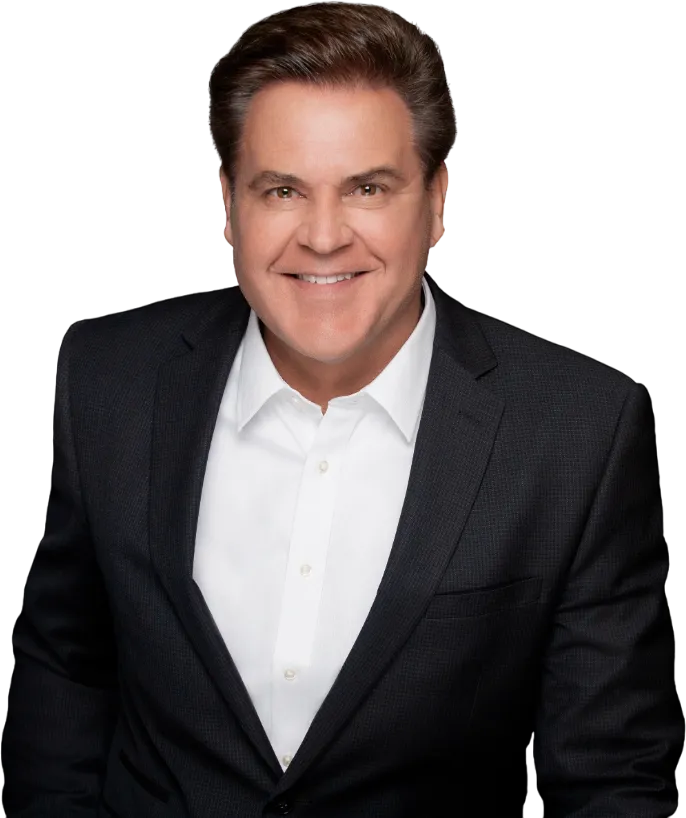
Rodney Rose, Loan Officer and Branch Manager
Rodney Rose
Loan Officer / Branch Manager
NMLS#: 1396861 DRE#: 00853403
C: (916) 232 3040
E: rrose@emortgagecapital.com
W: MortgageMarketUpdate.com
Better Business Bureau accreditation badge on a white background
Offices
A Window into Bond Investors’ Uncertainty About R‑Star

A Window into Bond Investors’ Uncertainty About R‑Star

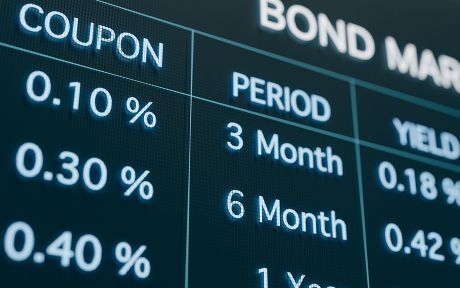
Monetary policymakers closely monitor the term structure of sovereign bond yields to uncover market participants’ beliefs about the future monetary policy stance, inflation, and activity. A particular object of interest is the natural real rate of return, or “r-star,” which acts as a guide for monetary policy decisions. Numerous papers have questioned how much information investors possess, and how precisely they know r-star. In this post based on a recent Staff Report, we explore what the term structure of interest rates can teach us about r-star and its perception by investors.


Read More »
Stablecoins and (Non)Crypto Shocks: A 2026 Update

Stablecoins and (Non)Crypto Shocks: A 2026 Update

Stablecoins are digital assets whose value is pegged to that of a fiat currency, typically the U.S. dollar at a peg of $1.00 per token.  In a previous blog post, we described the rapid growth of stablecoins through early 2025, highlighted changes in stablecoins’ reserve-asset composition, and examined their reactions to Bitcoin price shocks. In this post, we document the growth of stablecoins since our last post. Then, we examine how shocks from outside the crypto industry can impact the composition of stablecoins’ reserve assets. For our case study, we use the 2023 failure of Silicon Valley Bank (SVB) and its impact on USD Coin (USDC, issued by Circle), the second-largest stablecoin by market capitalization.

Read More »
Nonbank Subsidiaries and the Hidden Fragility of Internal Capital Markets Reallocation

Nonbank Subsidiaries and the Hidden Fragility of Internal Capital Markets Reallocation

This post concludes a three-part series on how bank regulation interacts with the organizational structure of banking firms. The first post documented the equity-rich nonbank subsidiaries inside bank holding companies (BHCs); the second post showed that BHCs met Basel III by reallocating capital internally, moving equity from nonbank affiliates to bank subsidiaries rather than raising new external capital. Here we ask what that reallocation meant for financial stability. The series draws on the authors’ recent Staff Report, “Regulatory Arbitrage Within the Firm.”

Read More »
How Basel III Changes Where Capital Sits: Nonbank Subsidiaries as Equity Reservoirs

How Basel III Changes Where Capital Sits: Nonbank Subsidiaries as Equity Reservoirs

This post is the second in a three-part series on how bank regulation interacts with the organizational structure of banking firms. The first post documented that nonbank subsidiaries inside bank holding companies (BHCs) are large, equity-rich “reservoirs,” and that bank-level capital diverged sharply from consolidated capital after Basel III took effect in 2015. This post asks why, and traces the answer through the internal plumbing of the holding company. The series draws on the authors’ recent Staff Report, “Regulatory Arbitrage Within the Firm.”

Read More »
Effect of Tariffs on U.S. Small Businesses

Effect of Tariffs on U.S. Small Businesses

How has the recent implementation of tariffs affected small businesses? Due to lack of data, little is known about this issue. In this Liberty Street Economics post, we use data from the 2025 edition of the Small Business Credit Survey (SBCS) to explore this question for businesses nationally and in the Second District (defined, for the purpose of this study, as New York, New Jersey, and Connecticut). We find that the majority of national firms in the goods and retail sectors reported experiencing financial challenges due to tariffs in 2025, with even larger shares of regional firms doing so. In response, about 80 percent of national and regional firms passed on at least some of the higher costs of imported inputs to customers, while about 60 percent absorbed some of the costs, as many firms did some of both. Firms that faced greater tariff challenges in 2025 were more pessimistic about employment and revenues in 2026.

Read More »
More Tariff Pass‑Through Is in the Pipeline

More Tariff Pass‑Through Is in the Pipeline

The past year brought dramatic changes to U.S. trade policy, including sweeping new tariffs, as well as a Supreme Court decision that further reshaped the tariff landscape. Many businesses saw their costs increase significantly and faced complex decisions about whether to absorb the tariffs through lower profit margins, raise their prices to recover the higher costs, or some combination of the two. Last year, we found that most businesses had passed on at least some of these higher costs to their customers through higher prices. Now, over a year later, have businesses finished adjusting prices, or do further tariff-induced price increases lie ahead? Our latest regional business surveys reveal that nearly half of firms that have paid tariffs still plan additional price increases to offset these costs, with some expecting to raise prices six months or more in the future.

Read More »
What Do Over 3,000 Bank Runs Teach Us About Banking Crises?

What Do Over 3,000 Bank Runs Teach Us About Banking Crises?

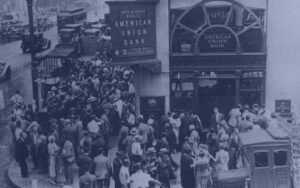
Runs on financial institutions are one of the salient markers of financial crises. But the role of runs in crises is a topic of longstanding debate. Runs can be seen as the key turning point, whereby even small shocks can generate severe crises with widespread bank failures. Another view is that runs are mainly a symptom of deeper rot in the financial system, exacerbating crises rather than being their primary cause. Understanding this debate has first order implications for how to think about financial crises and the appropriate policy responses. In this post, we use a new database of more than 3,000 bank runs (introduced in our companion post) to show that poor fundamentals are central to explaining both when runs occur and when they have severe economic effects. We argue that this evidence tempers the view that small shocks can have outsized real effects through self-fulfilling run dynamics.

Read More »
Using AI to Let History Speak About Bank Runs

Using AI to Let History Speak About Bank Runs

Banking crises are commonly associated with bank runs and banking panics, yet our empirical understanding of bank runs is constrained by a lack of bank-level data. In a new paper, we use large language models (LLMs) to extract information on bank runs from millions of digitized historical newspaper pages, creating the most comprehensive database of bank runs in U.S. history. Every bank run episode that we identify is documented on a companion website where users can browse and examine individual episodes, and read the original newspaper articles. In this post, we describe how we built this dataset and discuss what its basic features reveal.

Read More »
By using our site, you agree to use our cookies. For more information, read our Privacy Policy