








Hands stacking coins to illustrate saving, budgeting, or building financial growth

Mortgage Rate Intelligence & Market Updates

Stay informed about economic developments that may influence mortgage rates and home financing decisions. Explore updates covering inflation, Federal Reserve policy, Treasury yields, housing trends, and other important market indicators. Use the category filters to browse relevant economic and mortgage news, then select an article to read the full update. Review the latest stories and market insights to better understand changing conditions when considering your mortgage options.
RATE WATCH
FED FUNDS RATE 3.88%
NEXT FOMC 10/28/2026
NEXT MOVE 28.4% HIKE
IMPLIED CHANGE +7.1 bps
12-MONTH OUTLOOK +81.7 bps 3 or 4 hikes
TARGET BAND 3.75 - 4.00%
SOFR 3.87%
LATEST FED UPDATE 10/5/2026

What Today’s Economic Data Can Mean for Mortgage Rates

Mortgage rates can respond to changes in inflation, employment, Federal Reserve policy, Treasury yields, and expectations about future economic growth. These factors do not determine mortgage rates by themselves, but they can influence the broader bond market and the pricing lenders offer.

For homebuyers and homeowners, the important question is not simply whether economic news is “good” or “bad.” The key is how new information changes expectations for inflation, interest rates, and the economy. Those changes can contribute to mortgage rate movement and affect purchasing power, refinance opportunities, and monthly payment estimates.

Use the market updates below as supporting information, then consider your specific loan type, credit profile, property, and financing goals when evaluating current mortgage options.

Economic News Hub

Real Estate & Financial Market Updates

Article
Will Mounting Supply Chain Strains Hamstring the AI Investment Boom?

Will Mounting Supply Chain Strains Hamstring the AI Investment Boom?

Hunter L. Clark, Jeffrey B. Dawson, and Shad Turney Editor’s Note: The original version of the post included an inaccurate statement about the last chart. The chart itself is correct….
Stress and Strain from NBFIs to Banks

Stress and Strain from NBFIs to Banks

Viral V. Acharya, Nicola Cetorelli, and Bruce Tuckman Do the recent stresses in the NBFI space—notably the bankruptcies of Tricolor and First Brands, and the decision of Blue Owl Capital…
Same Shock, Different Roads? A K‑Shaped Pattern at the Pump

Same Shock, Different Roads? A K‑Shaped Pattern at the Pump

Rajashri Chakrabarti, Thu Pham, Beck Pierce, and Maxim Pinkovskiy In March 2026, energy prices surged to a four-year high, driven by the Iranian closure of the Strait of Hormuz amid…
In What Ways Has U.S. Trade with China Changed?

In What Ways Has U.S. Trade with China Changed?

Hunter L. Clark and Gregory Simitian Over the past year, U.S. trade policy with China has undergone enormous changes, but with surprisingly little effect on overall trade balances. In fact,…
Explaining the K‑Shaped Economy: What’s Behind the Divide?

Explaining the K‑Shaped Economy: What’s Behind the Divide?

Rajashri Chakrabarti, Thu Pham, Beck Pierce, and Maxim L. Pinkovskiy In our companion post, we used a new module of our Economic Heterogeneity Indicators (EHIs) to shed light on how…
Tracking the K‑Shaped Economy: Who’s Driving Spending?

Tracking the K‑Shaped Economy: Who’s Driving Spending?

Rajashri Chakrabarti, Thu Pham, Beck Pierce, and Maxim L. Pinkovskiy Editors’ Note: The title of the second chart in this post has been corrected. May 1, 10:40 am.   Aggregate…
Bank Failures: The Roles of Solvency and Liquidity

Bank Failures: The Roles of Solvency and Liquidity

Sergio Correia, Stephan Luck, and Emil Verner Do banks fail because of runs or because they become insolvent? Answering this question is central to understanding financial crises and designing effective…
The R*–Labor Share Nexus

The R*–Labor Share Nexus

Sophia Cho and John C. Williams Over the past quarter century, the U.S. economy has experienced significant declines in both the labor share of income and the natural rate of…
Rodney Rose Mortgage Team
Loans available nationwide
Low Rate, Low Fee.
"A Loan for every home"
Guaranteed Closing*
Rodney Rose, Loan Officer and Branch Manager
Rodney Rose
Loan Officer / Branch Manager
NMLS#: 1396861 DRE#: 00853403
C: (916) 232 3040
E: rrose@emortgagecapital.com
W: MortgageMarketUpdate.com
Better Business Bureau accreditation badge on a white background
Offices
In What Ways Has U.S. Trade with China Changed?

In What Ways Has U.S. Trade with China Changed?

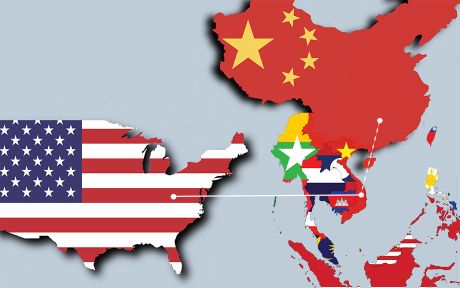
Over the past year, U.S. trade policy with China has undergone enormous changes, but with surprisingly little effect on overall trade balances. In fact, the U.S.’s twelve-month trade deficit, while highly volatile due to import front-running early in the year, ended 2025 at $1.2 trillion, almost unchanged from 2024. At the same time, China’s trade surplus with the world actually increased from $1 trillion to $1.2 trillion. However, when looking at changes between individual countries, one sees large shifts in bilateral balances. In this post, we will focus on changing trade flows between the U.S., China, and southeast Asia.


Read More »
Explaining the K‑Shaped Economy: What’s Behind the Divide?

Explaining the K‑Shaped Economy: What’s Behind the Divide?

In our companion post, we used a new module of our Economic Heterogeneity Indicators (EHIs) to shed light on how recent retail spending growth has been driven by high-income households. This fact is consistent with the popular press’s idea of a “K-shaped economy” in which higher-income households experience faster growth in spending than lower-income households. In this post, we dive deeper into the reasons behind this divergence by analyzing for which goods this trend holds true and ask whether it can be explained by changes in wages, inflation, or wealth. We find that, since 2023, wealth has increased the most for high-income households, while inflation has risen the most for low-income households, with both factors helping explain the fact that real retail spending rose the most for high-income households. In contrast, earnings display a more mixed pattern, though earnings of the highest earners have grown more rapidly than earnings of the lowest earners.

Read More »
Tracking the K‑Shaped Economy: Who’s Driving Spending?

Tracking the K‑Shaped Economy: Who’s Driving Spending?

Aggregate real consumer spending has risen solidly since 2023. However, it is less clear how widely shared this improvement has been across all segments of society. This is important because systematic heterogeneity may mask the dependence of aggregate growth on a relatively small group of households and thus conceal macroeconomic risks. In this post, we use consumer spending data recently added to the Economic Heterogeneity Indicators (EHIs) and find that retail spending growth has been driven by high-income households—those earning more than $125,000 per year. In the popular press, the phenomenon of higher-income households growing at a faster rate than lower-income households has been referred to as the K-shaped economy. We find that consumption has exhibited a K-shaped economy since 2023, although not in the pre-COVID period or during the post-COVID recovery.

Read More »
Bank Failures: The Roles of Solvency and Liquidity

Bank Failures: The Roles of Solvency and Liquidity

Do banks fail because of runs or because they become insolvent? Answering this question is central to understanding financial crises and designing effective financial stability policies. Long-run historical evidence reveals that the root cause of bank failures is usually insolvency. The importance of bank runs is somewhat overstated. Runs matter, but in most cases they trigger or accelerate failure at already weak banks, rather than cause otherwise sound banks to fail.

Read More »
The R*–Labor Share Nexus

The R*–Labor Share Nexus

Over the past quarter century, the U.S. economy has experienced significant declines in both the labor share of income and the natural rate of interest, referred to as R*. Existing research has largely analyzed these two developments in isolation. In this post, we provide a simple model that captures the joint evolution of the labor share and R*, which we call the R*–labor share nexus. Our key finding is that structural changes affecting R* also influence the evolution of the labor share, and thereby wages and prices. This highlights a potentially important channel, absent from many macroeconomic models, through which the factors that determine R* also affect the labor share and, in turn, broader macroeconomic developments, with implications for monetary policy.

Read More »
Use of Gen AI in the Workplace and the Value of Access to Training

Use of Gen AI in the Workplace and the Value of Access to Training

The rapid spread of generative AI (AI) tools is reshaping the workplace at a remarkable rate. Yet relatively little is known about whether workers have access to these tools, how the tools affect workers’ daily productivity, and how much workers value the training needed to use the tools effectively. In this post, we shed light on these issues by drawing on supplemental questions in the November 2025 Survey of Consumer Expectations (SCE), fielded to a representative sample of the U.S. population. We find that adoption of AI tools at work is heterogeneous, that a sizable share of workers see AI training as important, and that a significant share of employers are nonetheless not yet providing access to AI tools or training on how to use them.

Read More »
What Millions of Homeowner’s Insurance Contracts Reveal About Risk Sharing

What Millions of Homeowner’s Insurance Contracts Reveal About Risk Sharing

Housing is the largest component of assets held by households in the United States, totaling $48 trillion in 2025. When natural disasters strike, the resulting damage to homes can be large relative to households’ liquid savings. Homeowner’s insurance is the primary financial tool households use to protect themselves against property risk. Despite the economic importance of homeowner’s insurance, we know surprisingly little about how insurance contracts are actually designed with respect to property risk. In this post, which is based on our new paper, “Economics of Property Insurance,” we examine how homeowner’s insurance contracts are structured in practice. Using a new granular dataset covering millions of homeowner’s insurance policies, we document four striking patterns about coverage limits, deductibles, insurance pricing, and the distribution of property losses.

Read More »
A Closer Look at Emerging Market Resilience During Recent Shocks

A Closer Look at Emerging Market Resilience During Recent Shocks

A succession of shocks to the global economy in recent years has focused attention on the improved economic and financial resilience of emerging market economies. For some of these economies, this assessment is well-founded and highlights the fruits of deep, structural economic reforms since the 1990s. However, for a much larger universe of countries, the ability to weather shocks is still mixed and many remain vulnerable. In this post, we explore the divide between the two sets of countries and focus on the effects of recent economic shocks, including the ongoing conflict in the Middle East.

Read More »
The Fed Has Two Tools to Influence Money Market Conditions 

The Fed Has Two Tools to Influence Money Market Conditions 

The Federal Reserve’s 2022-23 tightening cycle involved the use of two monetary policy tools: changes in administrative rates and changes in the size of its balance sheet. This post highlights the results of a recent Staff Report that explores how these tools affect money market conditions. Using confidential trade-level data, we find that both tools have significant effects on the pricing of funds sourced through repo. These results suggest that the Fed can manage how financing conditions are affected even as it influences economic conditions. For example, the Fed can lower its administrative rates to loosen economic conditions, while shrinking its balance sheet to maintain financing conditions in the money markets. 

Read More »
By using our site, you agree to use our cookies. For more information, read our Privacy Policy