









Hands stacking coins to illustrate saving, budgeting, or building financial growth

Mortgage Rate Intelligence & Market Updates

Stay informed about economic developments that may influence mortgage rates and home financing decisions. Explore updates covering inflation, Federal Reserve policy, Treasury yields, housing trends, and other important market indicators. Use the category filters to browse relevant economic and mortgage news, then select an article to read the full update. Review the latest stories and market insights to better understand changing conditions when considering your mortgage options.
RATE WATCH
FED FUNDS RATE 3.88%
NEXT FOMC 10/28/2026
NEXT MOVE 28.4% HIKE
IMPLIED CHANGE +7.1 bps
12-MONTH OUTLOOK +81.7 bps 3 or 4 hikes
TARGET BAND 3.75 - 4.00%
SOFR 3.87%
LATEST FED UPDATE 10/5/2026

What Today’s Economic Data Can Mean for Mortgage Rates

Mortgage rates can respond to changes in inflation, employment, Federal Reserve policy, Treasury yields, and expectations about future economic growth. These factors do not determine mortgage rates by themselves, but they can influence the broader bond market and the pricing lenders offer.

For homebuyers and homeowners, the important question is not simply whether economic news is “good” or “bad.” The key is how new information changes expectations for inflation, interest rates, and the economy. Those changes can contribute to mortgage rate movement and affect purchasing power, refinance opportunities, and monthly payment estimates.

Use the market updates below as supporting information, then consider your specific loan type, credit profile, property, and financing goals when evaluating current mortgage options.

Economic News Hub

Real Estate & Financial Market Updates

Article
Will Mounting Supply Chain Strains Hamstring the AI Investment Boom?

Will Mounting Supply Chain Strains Hamstring the AI Investment Boom?

Hunter L. Clark, Jeffrey B. Dawson, and Shad Turney Editor’s Note: The original version of the post included an inaccurate statement about the last chart. The chart itself is correct….
Stress and Strain from NBFIs to Banks

Stress and Strain from NBFIs to Banks

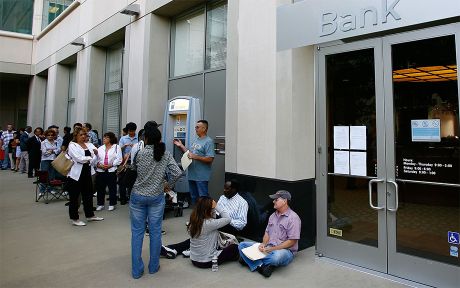
Viral V. Acharya, Nicola Cetorelli, and Bruce Tuckman Do the recent stresses in the NBFI space—notably the bankruptcies of Tricolor and First Brands, and the decision of Blue Owl Capital…
Same Shock, Different Roads? A K‑Shaped Pattern at the Pump

Same Shock, Different Roads? A K‑Shaped Pattern at the Pump

Rajashri Chakrabarti, Thu Pham, Beck Pierce, and Maxim Pinkovskiy In March 2026, energy prices surged to a four-year high, driven by the Iranian closure of the Strait of Hormuz amid…
In What Ways Has U.S. Trade with China Changed?

In What Ways Has U.S. Trade with China Changed?

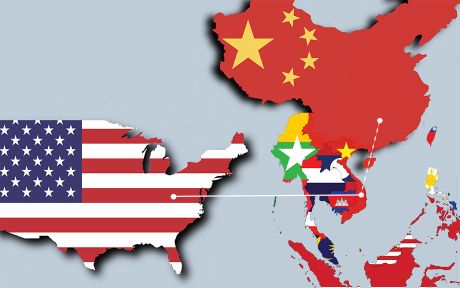
Hunter L. Clark and Gregory Simitian Over the past year, U.S. trade policy with China has undergone enormous changes, but with surprisingly little effect on overall trade balances. In fact,…
Explaining the K‑Shaped Economy: What’s Behind the Divide?

Explaining the K‑Shaped Economy: What’s Behind the Divide?

Rajashri Chakrabarti, Thu Pham, Beck Pierce, and Maxim L. Pinkovskiy In our companion post, we used a new module of our Economic Heterogeneity Indicators (EHIs) to shed light on how…
Tracking the K‑Shaped Economy: Who’s Driving Spending?

Tracking the K‑Shaped Economy: Who’s Driving Spending?

Rajashri Chakrabarti, Thu Pham, Beck Pierce, and Maxim L. Pinkovskiy Editors’ Note: The title of the second chart in this post has been corrected. May 1, 10:40 am.   Aggregate…
Bank Failures: The Roles of Solvency and Liquidity

Bank Failures: The Roles of Solvency and Liquidity

Sergio Correia, Stephan Luck, and Emil Verner Do banks fail because of runs or because they become insolvent? Answering this question is central to understanding financial crises and designing effective…
The R*–Labor Share Nexus

The R*–Labor Share Nexus

Sophia Cho and John C. Williams Over the past quarter century, the U.S. economy has experienced significant declines in both the labor share of income and the natural rate of…
Rodney Rose Mortgage Team
Loans available nationwide
Low Rate, Low Fee.
"A Loan for every home"
Guaranteed Closing*
Rodney Rose, Loan Officer and Branch Manager
Rodney Rose
Loan Officer / Branch Manager
NMLS#: 1396861 DRE#: 00853403
C: (916) 232 3040
E: rrose@emortgagecapital.com
W: MortgageMarketUpdate.com
Better Business Bureau accreditation badge on a white background
Offices
The Post‑COVID Decline in the Labor Share

The Post‑COVID Decline in the Labor Share

The labor share of income in the U.S. is currently at its lowest-ever level in the post-war period. The labor share measures the fraction of economic output paid to workers as wages and salaries. As such, it is a useful benchmark for wage growth: when the labor share falls, it means that productivity, prices, or both are growing faster than wages. After much-studied drops in the 2000s, the labor share fell sharply again after the COVID pandemic. In this post, we compare the dynamics of the labor share post-COVID to earlier periods to understand whether the recent decline represents the continuation of a trend or a new and distinct phenomenon. We find that both the cyclicality of the labor share and the contribution of reallocation to the labor share post-COVID are similar to earlier periods.


Read More »
Synthetic Stablecoins and Financial Stability

Synthetic Stablecoins and Financial Stability

On October 10, 2025, the announcement of a potential additional 100 percent tariff on Chinese goods drove risk-off moves across equities, Treasuries, credit spreads, and digital assets. Digital asset prices fell sharply, trading volumes surged, and liquidity vanished from key exchanges. In this post, we show how the price shock in digital assets was transmitted and amplified through a class of instruments called synthetic stablecoins—crypto assets whose structural design turned an external shock into a self-reinforcing deleveraging spiral within the crypto ecosystem.

Read More »
The New York Fed DSGE Model Forecast—June 2026

The New York Fed DSGE Model Forecast—June 2026

This post presents an update of the economic forecasts generated by the Federal Reserve Bank of New York’s dynamic stochastic general equilibrium (DSGE) model. We describe very briefly our forecast and its change since March 2026. To summarize, inflation forecasts are higher in 2026 than predicted in March. Projections for the short-run real natural rate of interest (r*) increased slightly relative to March.

Read More »
The Unintended Effects of Interest Rate Caps: Credit Reallocation to Safer Borrowers

The Unintended Effects of Interest Rate Caps: Credit Reallocation to Safer Borrowers

Several states have recently capped consumer loan rates with the stated purpose of protecting borrowers. In a recent Staff Report, we study how these interventions have played out in three states. In our first post about that study, we showed that rate caps lead riskier borrowers to face rationing in the credit market. One question that naturally arises is what lenders do with the credit they used to provide to high-risk borrowers before the caps were imposed. Lenders that lend exclusively to high-risk borrowers (at rates above the cap) may decide to stop lending to high-risk borrowers in that state. Others, however, may try to change their “credit box” by lending more to somewhat safer borrowers. In this post, we will try to understand how lenders reallocate credit after usury limits are implemented.

Read More »
The Unintended Effects of Interest Rate Caps: Credit Rationing for Risky Borrowers

The Unintended Effects of Interest Rate Caps: Credit Rationing for Risky Borrowers

In imperial China, 3 percent was the maximum legal monthly loan rate; charging more was punishable by 40 to 100 blows with the “light cane.” (Rockoff 2003) Centuries later, many U.S. states are imposing the same cap (without corporal penalties) on alternative credit providers, such as payday, installment, and auto-title lenders, with the goal of lowering credit costs and delinquency for the high-risk borrowers that rely on these funding sources. A concern, however, is that lenders will simply refuse to lend to these borrowers at lower interest rates. Our recent Staff Report studies how interest rate caps have played out in several states that recently adopted them. Using household-level data from a major credit bureau, we find that loan balances for the riskiest borrowers declined substantially relative to counterparts in states without caps. Despite taking on less debt, these borrowers did not experience an improvement in delinquencies.

Read More »
Struggling Regional Small Businesses Deeply Pessimistic About 2026 Prospects

Struggling Regional Small Businesses Deeply Pessimistic About 2026 Prospects

We recently updated the suite of indicators describing the performance of small businesses in the Second District (defined, for the purpose of this study, as New York, New Jersey, and Connecticut) and nationally with data from the 2025 edition of the Small Business Credit Survey (SBCS). In this post, we find that regional small businesses reported severe declines in employment and revenue growth in 2025 and became more pessimistic about growth in 2026. In contrast, small firms in the rest of the nation enjoyed stable revenues and employment in 2025 and, while they also had lower expectations of future growth, the decline was smaller in magnitude. Given the importance of small businesses in employment generation, analyzing such data helps to inform the design of effective monetary policy and to understand trends in the regional economy.

Read More »
Remote Work Leaves Younger Workers Sidelined

Remote Work Leaves Younger Workers Sidelined

Youth unemployment has risen dramatically since the pandemic—as has the prevalence of remote work. Our analysis suggests that these trends are related, with remote work making it more difficult for managers to train and mentor new employees. Accordingly, companies may be reluctant to hire less-experienced workers in distributed work arrangements. We estimate that remote work can explain 64 percent of the recent increase in unemployment among young college graduates. Further, the timing of this surge suggests that remote work—not generative AI—explains the bulk of the rise in youth unemployment.

Read More »
The Regional Side of the Story: K‑Shaped Pattern in Region, Wider Gap in Gas Spending

The Regional Side of the Story: K‑Shaped Pattern in Region, Wider Gap in Gas Spending

In this post, we use the inaugural release of our regional consumer spending indicators to ask whether these patterns hold for a significant portion of the Second District, and how regional spending patterns by income have been similar to or different from the national patterns we documented earlier. We find similar K‑shaped patterns in both retail and gas spending in our region as we do in the nation, with the K‑shaped pattern in gasoline in response to the recent gas price shock being more pronounced in the region.

Read More »
Food Insecurity and Consumer Pessimism

Food Insecurity and Consumer Pessimism

Current discussions regarding a bifurcated U.S. economy highlight the increasing economic divide between lower- and higher-income Americans in spending and earnings growth and wealth accumulation. While many households are doing fine and economic activity overall has been expanding at a solid pace, large segments of the population are facing high levels of economic insecurity and financial strain, and consumer sentiment on the whole has dropped to low levels. In this post, we use newly collected data from the Survey of Consumer Expectations (SCE) to update our 2020 analysis of disproportionate financial hardship experienced during the early pandemic and to investigate recent changes in food insecurity and broader economic strains. We then examine how food insecurity relates to the increase in consumer pessimism. We find a remarkable increase in food insecurity, particularly among lower-educated and lower-income households and households with young children. We document a contemporaneous increase in pessimism among the same groups, along with a sharp decline in job-finding expectations.

Read More »
By using our site, you agree to use our cookies. For more information, read our Privacy Policy